|
|
Polarisation |
| The World's First Guide On How to Deal With Us Versus Them Dynamics |
communication | current affairs | economy | leadership | philosophy |
|
Us versus them: Women versus men, Muslim versus non-Muslim, Black Lives Matter versus white supremacy, climate-deniers versus climate-fanatics, the West versus the Taliban, countryside versus city, vaccinated versus anti-vaxxers, indigenous versus immigrants, my in-laws versus my own family, Catalans versus Spaniards, management versus workers, ‘the’ people versus ‘the’ elite... It is easy to list examples of polarisation – shapes of us-them thinking – the variations on this theme are infinite. But the basic laws of polarisation never vary, in each and every case, the dynamics of polarisation are the same. Polarisation is universal. What are the dynamics of polarisation? How should we understand the workings of black-and-white thinking, and the fixed patterns associated with it? What role do we play in the process and what can we do to intervene? This book helps you to see the three basic laws, to choose one of the roles we can play in polarisation, and provides the four game changers we need to establish depolarisation strategies. This is what professionals are waiting for, how to deal with the phenomenon of polarization and detect how it relates to conflict, polarisation’s ‘little brother’. The book presents highly accessible insights into the possibilities and limitations of deploying dialogue and covers four crucial elements that we need to counteract polarisation. This book enables the reader to rethink old ideas and immediately benefit from that in practice. Above all, the book is practical. Besides offering insights and a strategic vision, it gives the reader a set of useful tools to handle polarisation. This is the first basic guide to polarisation for the professional. |
|
|
|
|
|
Bart Brandsma (1967) studied Philosophy and Journalism and worked as a journalist, documentary producer and management consultant. He considers himself a practical-minded philosopher, learning from and teaching professionals. His clients are police, public prosecutors, CEOs and management boards, journalists, mayors, youth workers, communication experts, activist and NGOs, ministers and government… While working as a consultant and trainer, he started to explore the ever-present dynamics of us versus them-thinking, some twenty years ago. He tested his Polarisation Strategies in conflict areas like Northern Ireland, Lebanon and Congo, and he has worked from Helsinki to Barcelona, from Rotterdam to Rumania. He wrote Polarisation and founded the company Inside Polarisation. With the book and the company, he aims to provide professionals with insights in the dynamics of polarization, and in their professional position and role within those dynamics. The book and the company have proved extremely successful. This is a testament to the need for an answer for growing polarization, in times of new and exploding media, and the depth and quality of the answers provided by Bart Brandsma. An internationally active author: |
TABLE OF CONTENTS This Book Keeps to the Middle Part I – Polarisation: How It Works 2 Five Roles Part II – Conflict: Polarisation’s Little Brother 5. Our View Of Human Nature A New Approach 8. Mediative Speech And Behaviour 10. Urgency, Urgency, Urgency Afterword |
|
|
|
||||
|

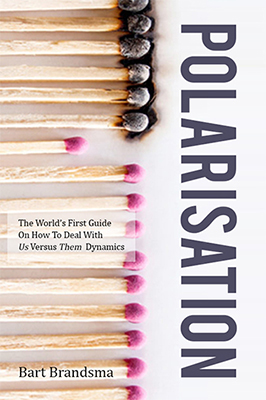

 Published in 2017, updated edition published in Ocotber 2025 | Paperback | 124 pages | ca. 40,000 words
 Over 10,000 copies sold
 Full English, Spanish and French translations available
  Longlisted for Management Book of the Year 2025
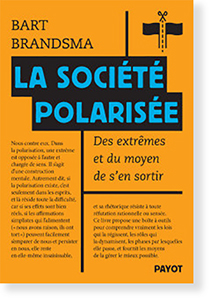
 Published in French by Payot & Rivages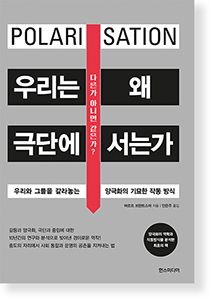
 Published in Korean by Hansmedia
 Published in Spanish and Catalan by the Instituto Catalán Internacional para la Paz