|
|
The Florence Effect |
| Creating Positive Impact With the Italian Approach to Leadership |
leadership |
|
In the storm of artificial intelligence, many jobs will be wiped out, others will be transformed, and new roles will emerge. Human beings face a fundamental question: Technology can process information faster than we can, but it cannot replace the deepest qualities of human leadership: intuition, empathy, trust, courage, imagination, responsibility, generosity, the ability to inspire others, and the capacity to give meaning to what we do. This is where The Florence Effect begins. The book is built on a simple but increasingly urgent idea: before leading others, we must first learn to lead ourselves with a new approach in the era of AI. For young professionals, this means discovering what gives them energy and joy, recognizing their talents, understanding what contribution they want to make, and creating a realistic plan to build a life and career with intention rather than by accident. For experienced leaders, the challenge is different. It is no longer simply about delivering results. It is about facing the new challenges of AI with creativity and creating the conditions in which other people can grow, take responsibility, discover their strengths, and eventually become leaders themselves. Florence is one of the protagonists of the book. The journey unfolds through its streets from morning to sunset, but the city is far more than scenery. Florence carries within it a centuries-old message about human potential. As one of the greatest cradles of the Renaissance, Florence became a place where artists, thinkers, scholars, craftsmen, merchants, architects, and innovators could meet and exchange ideas. Under the Medici family, who governed the city, extraordinary talents were brought into proximity, supported, challenged, and connected. The result was not simply individual brilliance, but an ecosystem in which brilliance could flourish. For us, this is a powerful metaphor for modern leadership. |
|
|
|
|
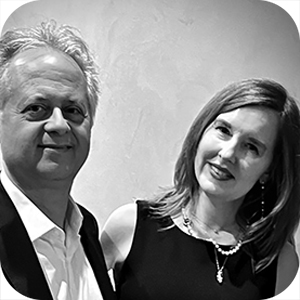
Francesco Luigi Filippelli is an Italian author, engineer, and international business executive. Alongside a career in senior leadership roles within multinational companies, he has devoted many years to studying personal growth, leadership, and the cultural heritage of Florence. He is the Vice President Railway for EMEA, a European division of Lippert, a global US-based company in manufacturing products and parts for Rail Industry recreation vehicles like RV’s, caravans, boats, and towing. Lippert employs over 14,00 employees in North America, Europe, Africa, and Asia, and a net sales of close to 4 billion dollars. He is also a member of the Advisory Board of the School of Industrial Engineering at the University of Florence. Sandra Astuti is an Italian author, legal consultant, executive and business coach specializing in professional development and team building. Her work focuses on strengthening leadership and communication skills and improving organizational processes through practical, actionable tools. She works alongside senior management teams during periods of change, corporate reorganization, and cultural development, combining strategic consulting, mentoring, training, and coaching in an integrated approach. |
TABLE OF CONTENTS A Personal Invitation Chapter 1 An Unexpected Encounter Epilogue Three paths before you Message to the Reader Appendix |
|
|

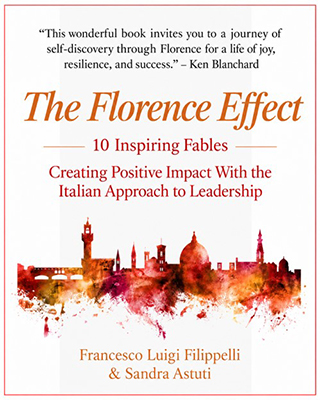

 Published in 2025 | Paperback | ca. 29,000 words
 Full English translation available